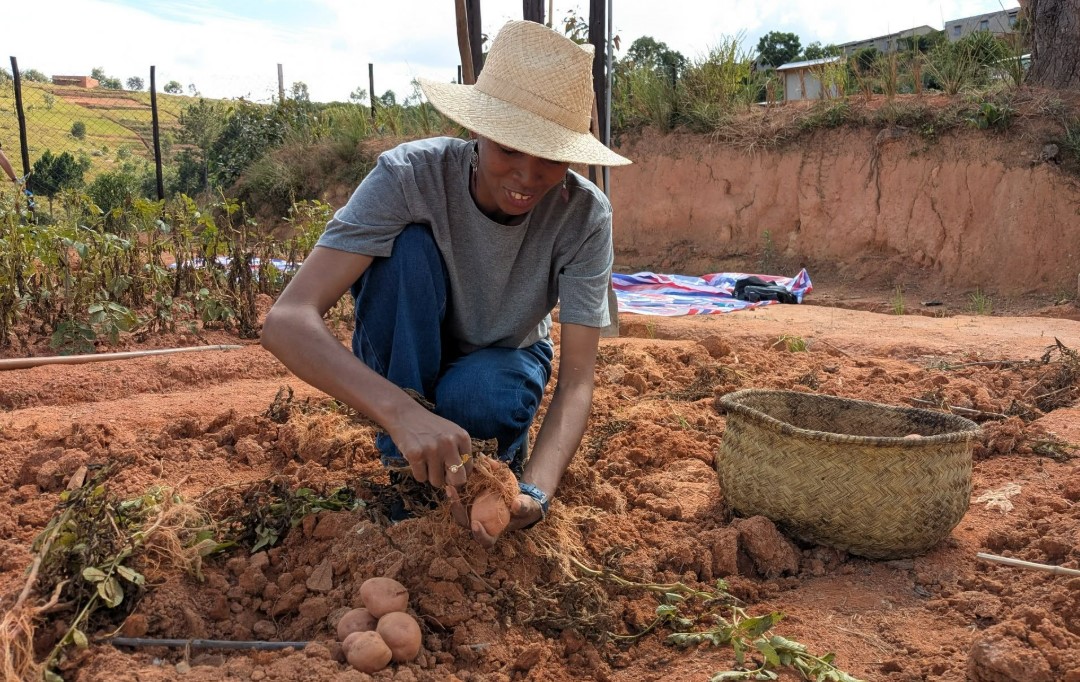
The trial was established to evaluate whether locally available organic inputs — cow dung, crushed zebu bones, and crushed zebu horn — could serve as viable and cost-effective alternatives to chemical NPK fertilizer for potato production. Each treatment was applied to replicated plots under similar growing conditions, with yield measured at harvest to assess the agronomic performance of each fertilization strategy.
Results showed meaningful differences in productivity across treatments. NPK consistently delivered the highest yields, as expected from its balanced and readily available nutrient content. However, the crushed zebu horn combined with cow dung treatment showed competitive performance, suggesting a synergistic effect between the slow-release nitrogen from horn meal and the organic matter provided by cow dung. Crushed zebu bones performed moderately, likely due to their phosphorus contribution, while cow dung alone produced the lowest yields, reflecting its relatively limited nutrient concentration.
From an economic standpoint, while NPK achieved the best raw yield, its higher purchase cost significantly reduced net profit margins compared to the organic treatments. The zebu horn and cow dung combination emerged as the most economically attractive option, offering a favorable balance between yield performance and low input cost — particularly relevant for smallholder farmers with access to these by-products. This suggests that locally sourced organic amendments could be a sustainable and profitable alternative to chemical fertilizers in similar agro-ecological contexts.